

From Binge-Watching to Smart Living: The Subscription Shift at CES 2026:
This article by Dawn Taylor, SVP of Strategic Growth at Domestic & General, explores how subscription service models are reshaping loyalty, retention, and long-term value for OEMs and retailers, and why brands that prioritize proactive service and recurring engagement will define the next era of smart living.
Editor’s Note: This column, written by
Domestic & General’s Dawn Taylor,
is the latest in an ongoing series of contributed
editorial columns. Readers interested in submitting
a contributed column in the future can
contact our Editor over email to receive
the Guidelines for Editorial Submissions page.
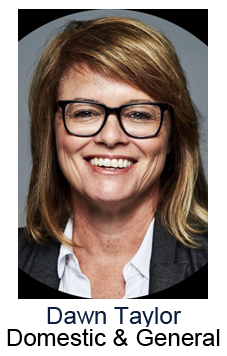
By Dawn Taylor, SVP of Strategic Growth at Domestic & General
The way we buy has fundamentally changed. A decade ago, a transaction was a distinct endpoint: you paid money, received a product, and the relationship largely paused until the next purchase. Today, that model is rapidly fading. We have moved from an era of ownership to an era of access, where the transaction is just the beginning of a continuous relationship.
This shift began with entertainment, but it has now entered every facet of daily life. From the food in our pantry to the appliances that cook it, the subscription economy is rewriting the rules of customer engagement.
As we look toward CES 2026, on January 6-9, 2026, in Las Vegas, this transformation stands as a central theme. The technology on display will not just be about faster processors or sharper screens; it will be about the service models that keep those devices relevant, functional, and integrated into our lives. For businesses, this represents a pivotal opportunity to move from intermittent sales to predictable, recurring value.
The Evolution of Value: Beyond the Media Streaming Boom
It is easy to trace the subscription boom back to a simple desire for entertainment. When Netflix and Spotify disrupted their respective industries, they did more than just digitize content; they rewired consumer psychology. They taught us that access is often superior to ownership. We traded stacks of DVDs and CDs for libraries of millions, instantly available and personalized to our tastes.
However, viewing this purely as a media trend ignores the massive economic shift underneath. What started in entertainment has expanded into a global market valued at $492 billion in 2024. Forecasts from Grand View Research predict this will balloon to an overwhelming $1.5 trillion by 2033. This growth is not accidental. It is driven by a consumer base that now demands convenience, personalization, and seamlessness in every category.
By 2020, global streaming subscriptions surpassed 1.1 billion users, a milestone largely fueled by the pandemic, according to the Wall Street Journal. Yet, as the world reopened, the habit remained. Now, that same expectation for “always-on” value is being applied to hardware, home maintenance, and essential services. We are seeing a transition where the physical product is merely the vessel for a service-based experience.
CES 2026: The Data-Driven Service Model
The upcoming Consumer Electronics Show (CES) in 2026 will serve as the global stage for this evolution. We expect to see a distinct move away from standalone gadgets toward connected ecosystems that rely on subscription models to function optimally.
According to a recent interview with Ian Khan, a globally recognized futurist and keynote speaker, companies at CES 2026 will be focused on leveraging data from their connected devices to deliver ongoing value. The hardware itself is no longer the primary value proposition; instead, it’s the ability to harness device-generated data that empowers brands to provide proactive support, predictive maintenance, and personalized service upgrades, deepening customer loyalty and driving recurring revenue.
In today’s landscape, expertise in data analytics is a critical differentiator. As highlighted by 5X, “companies that use predictive analytics are 2.9 times more likely to report revenue growth above the industry average,” showcasing the transformative power of data-driven decision-making in driving competitive performance.
At Domestic & General (D&G), this is where we excel. We use advanced data analytics to create models that don’t just respond to problems, they predict them. This forward-thinking approach helps our partners build lasting relationships that go far beyond the point of sale.
Reshaping Industries: From Fitness to Fridges
The subscription mindset has successfully jumped the gap from digital to physical. We see it in fitness, where a stationary bike is now a portal to daily live classes. We see it in the automotive industry, where features like heated seats or advanced navigation are becoming monthly add-ons.
In the home appliance and service plan space, the shift is equally profound. Traditional term plans, where a customer pays a lump sum for coverage they might forget they have, are evolving into monthly service plans. These modern subscriptions provide peace of mind at a lower upfront entry point. Crucially, they put the control back in the customer’s hands, allowing them to cancel anytime.
This flexibility might seem risky to a traditional business model, but it actually builds trust. The data backs it up. Repeat customers spend up to 67% more than first-time buyers, and increasing customer retention by just 5% can boost profits by 25% to 95%. When customers feel they have the freedom to leave, they are more likely to stay, provided the value is constant. For OEMs and retailers, these subscriptions do more than strengthen the brand; they provide a reliable, recurring revenue stream that smooths out the peaks and valleys of seasonal sales cycles.
The Psychology of Loyalty in a Subscription World
Why do subscriptions build stronger brands? The answer lies in the frequency of interaction. In a traditional retail model, a brand might speak to a customer once every few years. In a subscription model, the brand interacts with the customer frequently, sometimes 10 to 30 times more often. Every billing cycle, every service update, and every personalized recommendation is a touchpoint. These interactions build familiarity, and familiarity creates trust.
This loyalty is not just a warm feeling; it is a financial asset. According to the TrueLoyal Platform, 57% of consumers spend more with brands they feel loyal to. Subscriptions foster this sense of belonging by removing friction. The cost is predictable, the service is seamless, and the experience is tailored.
Personalization acts as the glue in this relationship. McKinsey reports that well-executed personalization programs can result in a 1–2 percent increase in total sales for retailers, with even higher conversion rates among loyal customers. When a brand uses data to tailor experiences, suggesting a repair before a breakdown occurs or offering an upgrade at the exact right moment- they transform a satisfied customer into an advocate.
The Smart Home Ecosystem: A New Frontier for Trust
The home is becoming the ultimate subscription hub. As of 2023, U.S. households averaged around 21 connected devices, according to Consumer Affairs. Additionally, Horowitz Research predicts that by 2025, nearly 48% of homes will have at least one smart device.
This density of technology creates complexity, and complexity creates a need for support. The future of smart living isn’t just about owning a smart fridge or a connected thermostat; it is about the services that keep those devices running. A smart home that constantly glitches is not a convenience; it is a burden.
Subscriptions unlock the potential of the smart home by offering “Device-as-a-Service” or comprehensive care packages. Imagine a scenario where a washing machine detects a motor alignment issue and automatically schedules a technician, covered by a monthly protection plan. The homeowner never experiences the stress of a breakdown.
While some view the subscription-heavy future as speculative, the trend lines are clear. Consumers are moving toward a hassle-free lifestyle where they pay for outcomes (clean clothes, cool food, entertainment) rather than just machinery. CES 2026 will showcase ecosystems designed to prioritize this long-term engagement. Brands that treat a sale as a one-off event will likely struggle to compete with those offering a perpetually supported lifestyle.
The “Moment of Truth”: Turning Service into Strategy
Even the best hardware fails. How a brand handles that failure, the “moment of truth” defines the future of the customer relationship.
When a TV goes dark or a dishwasher leaks, stress levels skyrocket. In the old model, this was a point of friction, often involving unexpected costs and long wait times. In the subscription model, this is an opportunity to prove value.
Research from Forbes indicates that 95% of consumers say customer service directly impacts their brand loyalty. Furthermore, Fluent Support found that 83% of customers feel more loyal to brands that actively listen to and resolve their complaints.
Subscription protection plans fundamentally change this dynamic. Because the customer is already “in the system,” the resolution path is faster and smoother. There is no haggling over costs because the coverage is active. The brand steps in as a hero, resolving the issue quickly.
This turns a potential negative into a massive positive. A customer who has a problem resolved effortlessly is often more loyal than a customer who never had a problem at all.
Domestic & General: A Partner in Retention
For over a century, Domestic & General has operated at the intersection of product care and customer loyalty. We have watched the landscape shift and have adapted our models to lead the change. Today, our focus is on helping partners navigate the transition from transactional sales to relational subscriptions.
Our success in the U.S. market demonstrates the viability of this approach. We have achieved a Net Promoter Score (NPS) over 60, a figure that sits well above the industry average. Coupled with an 86% customer retention rate, the data proves that customers value protection when it is delivered as a seamless service rather than a bureaucratic hurdle.
Customers across all the markets we operate in tend to protect more products when they have a subscription plan. This reflects the increased value, higher usage, and more relational experience that subscriptions provide. By making protection easy, flexible, and proactive, we build trust and loyalty, encouraging deeper customer engagement.
For OEMs and retailers, this model is a game-changer. It unlocks recurring revenue, provides deeper insights into how customers use products, and maximizes lifetime value.
The Financial Case for Subscription Models
The argument for subscriptions is not just about consumer preference; it is about business sustainability. The predictable nature of subscription revenue allows for better forecasting, more efficient inventory management, and more strategic R&D investment.
Loyalty program data from Accenture reveals that highly engaged customers generate 12-18% more annual revenue than non-members. In a marketplace where customer acquisition costs are rising, retention becomes the most efficient engine for growth.
By wrapping products in service subscriptions, brands insulate themselves from price wars. They stop competing solely on the sticker price of the hardware and start competing on the total value of the ownership experience. This is a far more defensible position in a crowded market.
Let’s Connect at CES 2026
CES 2026 will be the epicenter of subscription-led innovation. The showroom floor will be packed with the “what”: the devices, the screens, the robots. But the real conversations will be about the “how”: how to monetize these devices over time, how to keep customers engaged, and how to build a brand that lasts decades, not just product cycles.
For brands, recurring revenue and lifetime relationships are no longer optional, they are essential for survival and growth.
At CES, Domestic & General will be discussing how our proven frameworks drive retention, boost NPS, and maximize lifetime value for some of the world’s largest brands. We are helping partners move from a reactive stance to a proactive, data-driven relationship with their customers.
If you are looking to transform your customer journey and unlock the power of the subscription economy, we should talk.
Reach out to the Domestic & General team to schedule a meeting at CES 2026. Let’s explore how we can turn your buyers into lifelong advocates.
About the Author
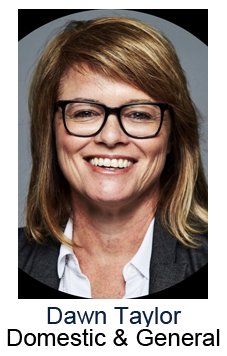
Dawn Taylor serves as the Senior Vice President of Strategic Growth at Domestic & General US. In her role, she drives business development and client growth initiatives, focusing on creating scalable partnerships and delivering long-term value within the warranty ecosystem. Additionally, Dawn is a dedicated member of the Women of Warranty Advisory Board, where she actively supports the advancement of women across the industry.