

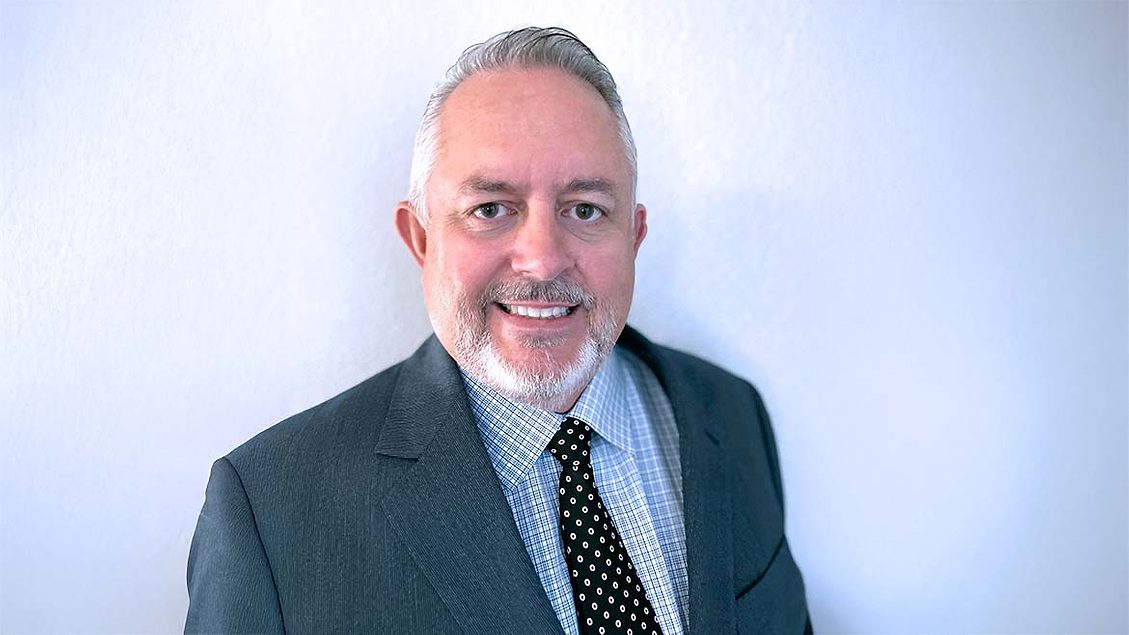
After Greg Weaver got out of the Navy, he started working in mining in northern Nevada. After a few winters, it was time to do something else. “It was like six degrees, and I’d be working outside.” He found a listing in the paper for an aerospace company that did turbine blade repair.
After about a month on the job, they told him he had an aptitude for inspection and asked about his interest in NDT. He didn’t know what it was but soon found out. He started doing fluorescent penetrant inspection on turbine blades, inspecting hundreds then thousands per day. From there, he worked his way up. “That’s where I got my first Level III and I’ve been doing that ever since,” Weaver says.
The owner of Weaver NDT has had a long career in the field of NDT—and he’d encourage the next generation to give the field a try.
How did your career progress from there?
I was at an aerospace company and we had a company come in with a brand-new technology, a resonance technology. And I kept interfacing with the company’s CEO and trying to provide them insights into turbine blades. Anything that I was allowed to share anyway. And he just made me an offer one day. That company’s an OEM of that technology. So that was nice. Instead of reading all the specifications, you get to start writing them with the big OEMs of aerospace. I was there for 11 years. It was 20 years working for somebody in NDT before I jumped out.
What might a typical day look like for you if you’re working with a client?
Well, I’m also working for Phoenix Neutron Imaging. Part of the day will be Weaver NDT and part Phoenix Neutron. There’s an R&D portion, and then there’s kind of a production portion. And I’m still working on the resonance applications.
I do eddy current in the field for the local helicopter teams that are here. You know, I do the Las Vegas metro and some of the tourist helicopters here in Vegas because there’s no real NDT service here. I have a lot of commercial but also private jets that come through. But I do travel for the helicopter stuff on occasion because it’s a very specific inspection that I don’t know how many people do, but I’m one of the guys that do it.
We had another guy here that worked at Area 51. I don’t know what he really did all the time, but he was trying to build his business. We worked together and shared equipment and he just got tired of Area 51.
There’s a flight that leaves here every day. You fly in and depending on whatever’s happening out there, like he would say there’s a mission, so he might stay. You’d fly four days a week and then you get three days off. But he just got tired of that with his family. And he moved on and there really is no other aerospace NDT company here in Vegas, which is stunning because it is a big metropolis with a lot of work.
When you started in your career, did you always think you’d be in quality or NDT?
When I first started there, aerospace was new. It was just super intriguing. And I really liked the inspection side, and the method side of it was fascinating to me to do the X-ray. And the interpretation and the physics. I’ve always really loved physics.
And I had two very good mentors there where I worked. One that was real production-based, and then one that was very theory-based. And the theory-based guy would teach. And the production-based one would really train us and say, what kind of crack is that? Why is that crack there? How do you think it developed? You know, really go through the dynamics that I don’t think a lot of people get in NDT sometimes.
And that just has always captured me and still does.
What do you like best about NDT? Is it the materials or the physics of it? Or something else?
Well, both of those are super, super interesting to me. And I think they really are the key to NDT, right? I think understanding how to make sure they don’t do those things, like the whole dynamic is the most interesting thing for me.
But safety too. It’s like, if we can do all this right, everybody’s safe, for everything.
I have friends that hang off the windmills, and they’re out there doing NDT, in the wind and all that. And on the offshore stuff, and I’m lucky, most of my stuff is indoors. But I see those guys doing that and they’re doing it obviously to make a living, but they’re also doing it because it’s important.
And I think it’s one of the things I’m an advocacy member of the committee for ASNT. I have been trying to get a deeper dive into getting the younger kids to understand.
Can you think of any special highlights or challenges as you look back?
It’s funny. It’s like the same exact thing for the highlights, and the challenge. It’s on the new technology side and even on the neutron side, getting people to understand what they don’t understand.
When they do understand, getting the successes of implementing something that they really need, that they didn’t know they needed. Neutron and X-ray are very complementary, and they interact with materials differently.
And if you use both you get a full picture. If you only use one, you only get half of the picture. Maybe that half is all you need, right? And that’s great. No matter what method you use, if it’s penetrant, X-ray, ultrasonic, mag particle, you are inducing something or doing something to the part and seeing what that reaction is.
The safety of it could be the difference between the long life of something or short life or a building issue. All of those things are challenges and they’re successes when you find somebody that goes, I get what you’re saying. Or you saved us the time, or you saved us the issue that could have happened because we were able to identify that one out of 10,000 parts that you were able to segregate.
And those are things that not a lot of us are doing, but it’s very rewarding when people actually use it.